
Deciding to pursue facelift surgery is a significant commitment, one that involves not just financial investment and recovery time, but trust. Trust that the surgeon you choose possesses the skill, judgment, and artistry to deliver results you’ll be proud of for years to come. In Beverly Hills, where aesthetic standards are exceptionally high and the competition among plastic surgeons is fierce, knowing how to evaluate and select the best facelift surgeon is an essential first step.
At Privé Beverly Hills, Dr. Catherine Chang has built a reputation for facelift results that are consistently natural, refined, and expertly tailored to each patient’s anatomy and goals. This guide draws on the principles that define surgical excellence in facelift surgery to help you ask the right questions and make a confident, well-informed choice.
Unlike many medical procedures where outcomes depend primarily on the established protocol, facelift surgery is deeply dependent on the individual performing it. Two surgeons with equivalent training can produce dramatically different results on the same patient because facelift surgery is as much art as it is science.
The best facelift surgeons combine:
When evaluating facelift surgeons, your goal is to find someone who excels across all of these dimensions not just one or two.
Before considering anything else, verify that any surgeon you consult is board-certified by the American Board of Plastic Surgery (ABPS). ABPS certification requires completion of an accredited plastic surgery residency, a minimum number of supervised surgical cases, written and oral examinations, and ongoing continuing medical education.
Alternatively, some excellent facelift surgeons are certified by the American Board of Facial Plastic and Reconstructive Surgery (ABFPRS), which offers specialty certification for otolaryngologists (ENT surgeons) who have completed additional facial plastic surgery training.
Be cautious: board certification in a related field such as general surgery, dermatology, or obstetrics does not qualify a surgeon to perform facelift surgery. Always verify the specific board and the relevance of the certification to facial plastic surgery. Dr. Catherine Chang is board-certified and has dedicated her practice at Privé Beverly Hills to cosmetic surgery of the face and body, with facial rejuvenation as a primary focus.
Beyond board certification, many of the finest facelift surgeons have pursued additional fellowship training specifically in cosmetic or facial plastic surgery. Fellowship-trained surgeons have spent years beyond their residency focused exclusively on aesthetic procedures, developing a depth of experience that general plastic surgeons may not match in specific areas.
A surgeon whose practice is concentrated in facelift and facial procedures will accumulate a higher volume of cases and continuously refine their technique in ways that generalists cannot. When evaluating a surgeon’s background, ask what percentage of their practice is dedicated to facelift and facial surgery.
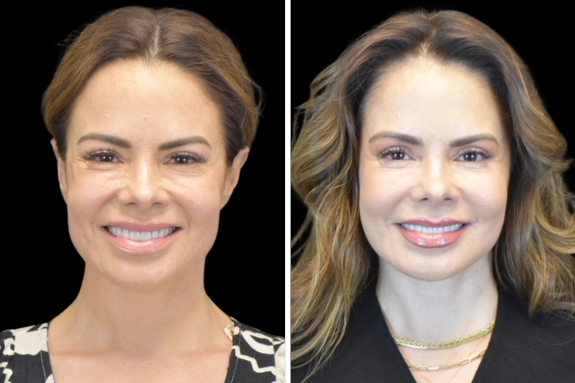
Before-and-after photographs are the most direct evidence of a surgeon’s aesthetic sensibility and technical results. When reviewing a surgeon’s photo gallery, whether in their office or on their website, look for:
Natural results: The hallmark of the best facelift surgeons is that their results look like younger, refreshed versions of the same person, not an altered person who obviously had surgery. Be wary of portfolios featuring over-pulled, windswept, or excessively tight results.
Consistency: Does the quality of results look consistently good across many patients, or are there a few excellent cases surrounded by mediocre ones? Consistent quality across diverse patient anatomies indicates reliable technique.
Patients similar to you: Look for before-and-after patients who share your age range, skin type, and degree of facial aging. Results on a 45-year-old with mild laxity don’t tell you much about what the surgeon can achieve on a 60-year-old with more significant descent.
Longevity of results: If the practice has been operating for many years, look for long-term follow-up photographs, results at one, two, or five years post-surgery. Good facelift results should remain natural and attractive over time.
The neck: The neck is one of the most telling areas in facelift surgery. A well-executed facelift should include a natural, smooth neckline that integrates harmoniously with the lower face. Watch for unnatural-looking necks, visible scars, or platysmal banding (neck bands that weren’t adequately addressed).
Your consultation appointment is your most important tool for evaluating a surgeon, and it’s a two-way interview. You’re assessing the surgeon as much as they’re assessing you.
Questions to ask during your facelift consultation:
A surgeon of the caliber of Dr. Catherine Chang will answer every question thoroughly, welcome scrutiny, and never make you feel rushed or pressured. The ability to listen carefully and communicate clearly is as important as any technical skill.
Red flags in a consultation include: a surgeon who discourages questions, pushes you toward a procedure without discussing alternatives, makes guarantees about outcomes, quotes pricing before understanding your goals, or has a support staff that seems indifferent to your concerns.
The best facelift surgeons don’t have a single technique they apply to every patient, they have a repertoire of approaches and the judgment to select the right one. Key techniques to understand:
SMAS facelift: The SMAS (superficial musculoaponeurotic system) is the layer of fibromuscular tissue beneath the skin. A SMAS facelift addresses both the skin and this deeper layer, producing longer-lasting results than skin-only procedures.
Deep plane facelift: A more advanced technique that releases and repositions the facial tissues at a deeper level, producing very natural and long-lasting results, particularly in the midface and nasolabial fold area. Requires a highly skilled surgeon.
Extended deep plane: Further extends the release to address the neck and jowls comprehensively.
Understanding which technique a surgeon proposes and why is important. A surgeon who recommends the same technique for every patient without a nuanced explanation may not be tailoring their approach to your specific anatomy.
The best facelift surgeons are honest about what surgery can and cannot achieve. Facelift surgery addresses facial laxity and tissue descent, it cannot significantly change the quality or texture of the skin, address volume loss, or produce results that last indefinitely. Combining a facelift with complementary treatments (skin resurfacing, fat grafting, injectables) often achieves more comprehensive rejuvenation.
Dr. Catherine Chang at Privé Beverly Hills embodies the qualities that define an exceptional facelift surgeon: meticulous technique, a sophisticated aesthetic eye, genuine commitment to patient care, and a track record of consistently natural, beautiful results. Her patients in Beverly Hills and beyond consistently describe an experience characterized by thoroughness, transparency, and results that exceeded their expectations.
If you’re beginning your search for the best facelift surgeon, a consultation at Privé Beverly Hills is an excellent place to start. Contact the practice today to schedule your appointment and take the first step toward the confident, refreshed appearance you deserve.