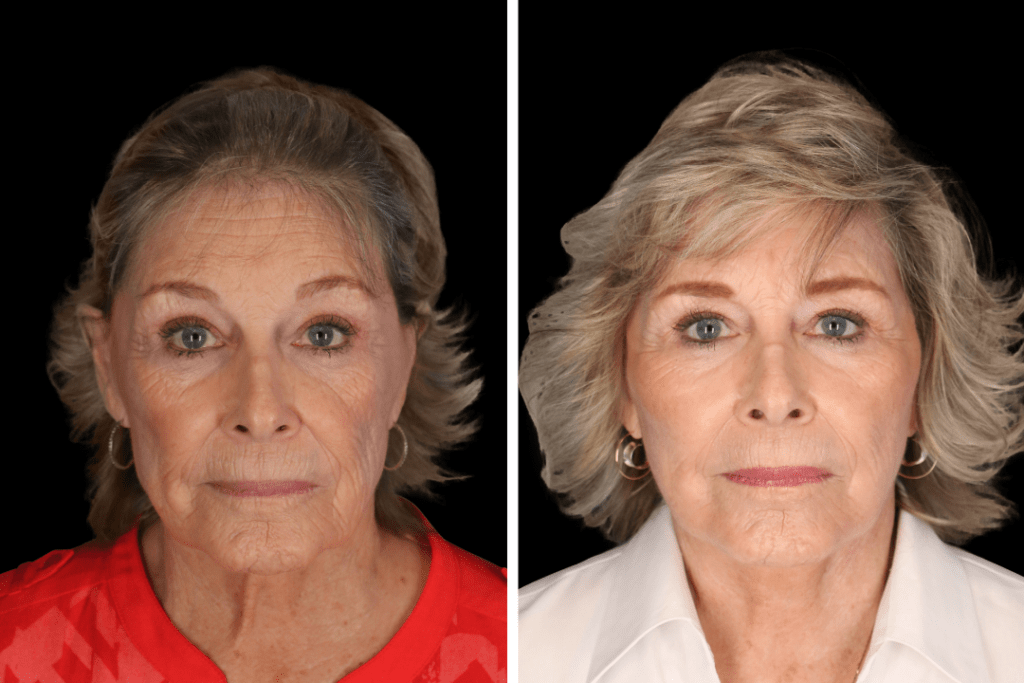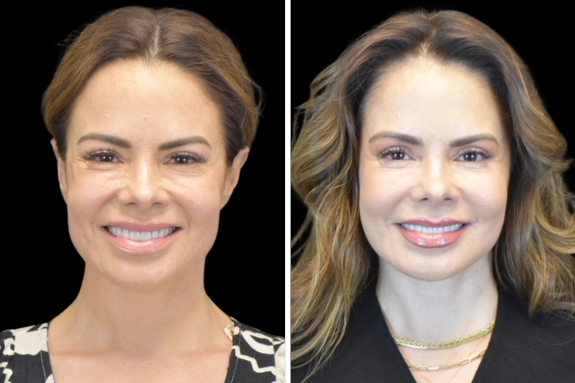

A facelift is a significant decision, and most people who choose one hope it will be the only facial surgery they need for many years. Sometimes, though, the result does not feel quite right. The face may look pulled or windswept, an earlobe may have changed shape, scars may be more visible than expected, or the neck may not match the improvement in the cheeks and jawline. In other cases, a facelift performed well many years ago has simply aged along with the rest of the face. At Privé Beverly Hills, Dr. Catherine Chang, MD, FACS, evaluates patients who are considering a revision or secondary facelift, and for many of them a careful second consultation is the most valuable first step.
A revision facelift, also called a secondary facelift, is a procedure that corrects or refreshes the results of a previous facelift. Our revision facelift page describes two broad goals: correcting outcomes that look unnatural, unbalanced, or windswept, and refreshing an earlier result that has aged over time. Both involve a full evaluation of the facial skin, the underlying structure, and the incisions from the original surgery before any plan is made.
Secondary surgery is not simply a repeat of the first operation. Prior incisions, scar tissue, changes in skin quality, and the position of deeper tissues all influence what is possible. In a 2021 review in Seminars in Plastic Surgery, Dibbs and colleagues described revision face and neck lifts as more complex by nature and emphasized that they require a comprehensive preoperative assessment. Skouras and colleagues, writing in Plastic and Reconstructive Surgery Global Open in 2020, similarly reviewed the problems frequently encountered in revision and secondary facelift surgery. These perspectives underline why experience with facial anatomy matters so much in secondary cases.
It helps to separate two situations. A corrective revision addresses something that did not turn out as hoped, such as an unnatural pull, distorted hairline, or visible scarring. A refreshing secondary facelift addresses natural aging that has continued since a well-healed earlier procedure. The evaluation, the conversation, and the plan can differ considerably between these situations.
People seek a second consultation for many reasons, and these concerns deserve to be taken seriously and discussed with sensitivity. A dissatisfying surgical result can affect confidence and how a person feels about their own reflection.
A face that looks tight or swept back usually reflects tension that was placed on the skin in a direction that does not match how the face naturally ages. At Privé Beverly Hills, Dr. Chang uses SMAS-based facelift techniques described on our facelift page, which reposition the deeper supportive layer and lift largely in a vertical direction rather than relying on a backward skin pull. Understanding how a prior result was achieved helps guide how it might be revised.
Visible scars, a shifted sideburn or hairline, or an earlobe that appears pulled downward are among the issues that may be evaluated in a revision consultation. These details may seem small, but they strongly influence whether a result looks natural. Careful incision planning and tension management are central to addressing them.
Some people feel that their jawline or neck did not improve as much as the mid-face, or that laxity returned sooner than expected. In these cases, a revision plan may include the neck. Our neck lift page describes how Dr. Chang addresses the neck as part of facial rejuvenation.
Facial aging involves more than skin laxity. Gradual loss of volume can make a face look hollow or tired even after a well-performed lift. For some patients, facial fat grafting may be discussed alongside a secondary procedure to restore balance.
A second consultation can be helpful at several points. It may help soon after an initial facelift, when a patient is unsure whether what they see is still part of healing. It may help years later, when natural aging has returned. It may also help when a patient simply wants an independent, detailed explanation of their anatomy and options.
Swelling and tissue changes take time to settle after any facelift, and some features that seem concerning early on improve as healing progresses. For that reason, decisions about revision surgery are generally made after tissues have had adequate time to heal. A consultation can still be useful earlier to understand what is expected and what may warrant watchful waiting. Dr. Chang can explain how timing applies to each individual situation.
Bringing records from the original surgery, including operative notes if available, the date of the procedure, and any photographs from before the first surgery, can be very helpful. Knowing which techniques were used, whether the neck was treated, and whether other procedures were performed at the same time gives a clearer picture of the starting point. Share any healing complications, current medications, and health conditions as well.
It is reasonable to ask what specifically is causing the concern, what can realistically be improved, what limitations scar tissue may impose, and what recovery is likely to involve. Asking how the surgeon approaches tension, incisions, and the deeper layers of the face helps you understand the reasoning behind the plan.
Dr. Catherine Chang, MD, FACS, is a board-certified plastic and reconstructive surgeon with a sub-specialization in cranio-maxillofacial aesthetic and reconstructive surgery. She completed her undergraduate and medical education at Columbia University, her plastic and reconstructive training at the University of Pennsylvania, where she served as chief resident, and fellowship training at Harvard Medical School and Massachusetts General Hospital. You can read more on our about Dr. Chang page.
Every revision case is different. During a revision consultation, Dr. Chang examines the anatomy of the face and bone structure, the skin, and the prior incisions before developing a customized plan. Her training in craniofacial and reconstructive surgery informs a detailed understanding of the facial framework, which is particularly relevant when tissues have already been altered by surgery. The goal at Privé Beverly Hills is a result that looks refreshed and natural rather than operated on.
Revision surgery can often improve concerns, but it may not be possible to fully reverse every effect of a previous procedure. Scar tissue, skin quality, and individual healing all set limits. An honest discussion of what can and cannot be achieved is essential, and it forms part of the informed decision to proceed or not.
Overall health, smoking status, blood pressure control, certain medications, and conditions that affect healing all influence surgical safety. These are reviewed carefully during consultation. In some situations, a nonsurgical approach or a smaller targeted procedure may be more appropriate than a full secondary facelift.
Seeking a revision can carry feelings that a first facelift did not. Some people feel disappointed, others feel anxious about undergoing surgery again, and many worry about whether they will be heard. These feelings are understandable and deserve space in the consultation. A calm, unhurried conversation in which concerns are acknowledged, questions are answered fully, and options are explained without pressure can make an important difference to how a person approaches the decision.
There is rarely a need to decide quickly. Taking time after a consultation to review information, reflect on priorities, and discuss the plan with trusted family members or friends is a reasonable part of the process. Returning with follow-up questions is welcome. A decision made with full understanding of the benefits, limitations, and recovery is more likely to feel right in the long term.
Faces differ by ancestry, bone structure, skin thickness, and personal aesthetic preference, and these differences matter in revision surgery just as they do in a primary facelift. A plan that respects a person’s own features, rather than imposing a uniform look, supports results that feel authentic. At Privé Beverly Hills, preserving individual character is part of what natural means.
Some people considering a secondary facelift also have concerns about the eyelids, brows, or skin quality. In selected cases, these may be addressed at the same time or in stages. Combining procedures can be efficient, but it also affects recovery, and the decision depends on health, goals, and the specific findings at consultation. Dr. Chang discusses the sequence that makes sense for each patient.
According to our revision facelift page, recovery from a secondary facelift is generally similar to recovery from the original procedure, and patients follow similar aftercare instructions. Swelling and bruising are expected in the early weeks and resolve gradually. Final contours continue to refine for months as tissues settle.
Following postoperative instructions closely, attending follow-up visits, protecting incisions from sun, and avoiding strenuous activity until cleared all support healing. Patients who travel to Beverly Hills for surgery can review our traveling patients page for planning information.
Secondary procedures can involve a slightly longer period of tissue settling. Giving the face time to heal before judging the outcome, and keeping in contact with the practice throughout, helps patients navigate recovery with confidence.
If you are unhappy with a previous facelift or want to understand whether a secondary procedure may help as your face continues to age, a thoughtful second consultation can bring clarity. Dr. Chang and our team at Privé Beverly Hills welcome the opportunity to review your history and discuss your goals. Request a consultation to begin the conversation.