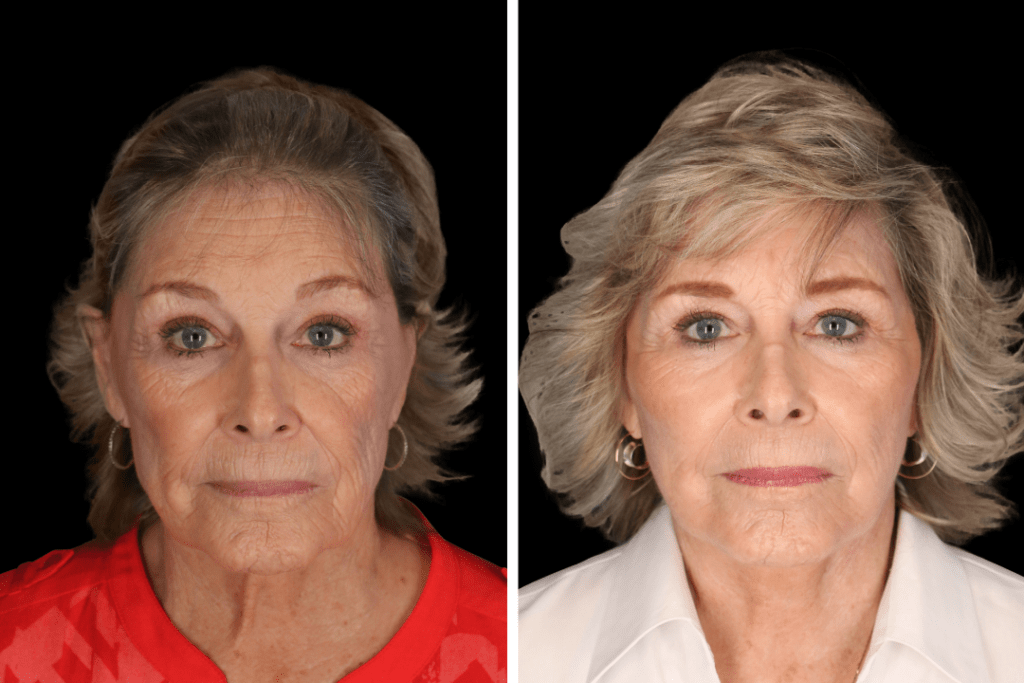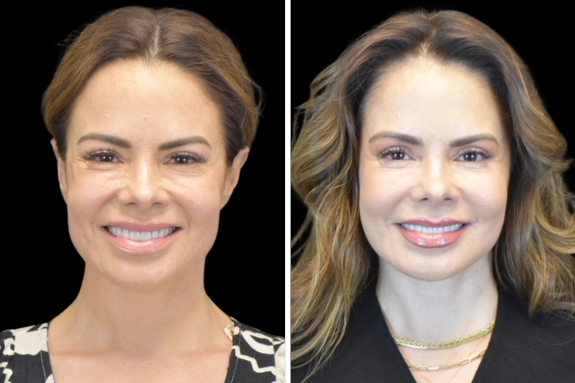

The chin rarely draws attention to itself, yet it quietly determines how the entire lower face is read. A chin that sits slightly behind the lips can make the nose appear larger, soften the jawline, and blur the transition between the face and the neck. Many patients who visit Privé Beverly Hills describe feeling that something about their profile is “off” without being able to name the cause, and in a meaningful number of cases the answer lies in the relationship between the chin and the jaw. Chin harmonization is the term increasingly used to describe a considered, proportion-based approach to that relationship, and it has become one of the most searched facial balancing concepts in Beverly Hills and across Los Angeles.
Chin harmonization is not a single procedure. It is a planning philosophy that evaluates the chin as one part of a connected lower-face framework, which includes the jawline, the angle of the jaw, the soft tissue beneath the chin, and the way all of these relate to the nose, lips, and neck. Rather than simply adding projection to the chin, the goal is to bring each element into proportion so that the face appears balanced from the front, in profile, and at the three-quarter view that others most often see in conversation.
At Privé Beverly Hills, Dr. Catherine S. Chang, MD, FACS approaches harmonization through her training as a board-certified plastic and reconstructive surgeon with a sub-specialization in cranio-maxillofacial aesthetic and reconstructive surgery. Dr. Chang completed her plastic surgery training at the University of Pennsylvania and her specialized fellowship at Harvard Medical School and Massachusetts General Hospital, where she also served as a clinical instructor of surgery. That background in facial skeletal anatomy shapes how our surgical team evaluates the lower face: we look first at structure, then at soft tissue, and only then at which tools may help.
Chin augmentation refers to the act of increasing the size or projection of the chin, most often with an implant. Chin harmonization is broader. It may include a chin augmentation procedure, but it may also involve refining the jawline, addressing fullness beneath the chin, or coordinating treatment with other facial procedures so that no single feature looks enhanced in isolation. In practice, the distinction matters because a chin that is improved without attention to the jaw and neck can look added on, while a chin refined within its surrounding framework tends to look as though it has always been there.
Patients arrive at the conversation from many directions, and their concerns deserve to be heard on their own terms. Some have always felt self-conscious about a recessed or “weak” chin and notice it most in photographs taken from the side. Others feel their jawline has never had clear definition, or that fullness under the chin persists despite a healthy weight and active lifestyle. A growing number of patients come to us after years of seeing their faces on video calls, where the angle of a camera can exaggerate imbalance in the lower face.
The chin and nose are visually linked. When the chin lacks projection, the nose may appear more prominent than it actually is, and some patients who believe they want rhinoplasty discover during consultation that subtle chin refinement may address much of what bothers them. In other cases, combining chin work with rhinoplasty creates a more cohesive profile than either procedure alone. Dr. Chang evaluates these relationships carefully so that recommendations are based on proportion rather than on the feature a patient first notices.
A defined jawline depends on more than bone. The skin and fat beneath the chin, the position of the platysma muscle, and the quality of the skin along the jaw all influence how crisp the transition between face and neck appears. Chin projection itself can improve the appearance of this angle, because a chin that sits further forward places gentle tension on the soft tissue below it. When fullness or laxity is the larger factor, our surgical team may discuss additional options designed specifically for the neck.
There is no single ideal chin. Facial proportions vary across ethnic backgrounds and heritage, and features that one culture considers balanced may differ meaningfully from another. Dr. Chang believes that beauty is subjective and shaped by each person’s anatomy, genetics, skin type, and ethnic and cultural heritage. Our planning respects those differences: a patient of East Asian heritage seeking a softly tapered lower face, for example, may have very different goals than a patient seeking a broader, more angular jaw, and both deserve a plan built around their own identity rather than a template.
Our Signature approach to chin harmonization begins with a detailed consultation in our Beverly Hills office. Dr. Chang examines the facial skeleton, the soft tissue envelope, dental and bite relationships, and facial symmetry, and she listens closely to what each patient hopes to change and what they wish to preserve. Dr. Chang will never suggest a procedure that she does not believe is in line with a patient’s aesthetic goals, and she aims to reach those goals in the safest and most minimal way possible. The options below may be used alone or in combination.
For many patients with a mildly to moderately recessed chin, a chin implant offers a reliable way to add projection and improve lower-face balance. Dr. Chang offers standard porous polyethylene (Medpor) implants, placed through a small incision concealed beneath the chin or, in some cases, inside the mouth. Because the implant sits against the existing chin bone, the result is visible almost immediately, though final contour emerges as swelling resolves. A 2025 systematic review and meta-analysis by Abdulaziz and colleagues in the Journal of Plastic, Reconstructive and Aesthetic Surgery, which pooled data from 48 studies and more than 3,700 patients, found that alloplastic facial implants are a viable option for skeletal augmentation, with reported complication rates for chin implant materials such as silicone and Medpor in the low single digits.
When a patient’s anatomy is asymmetric, when the jawline as well as the chin needs refinement, or when a standard implant shape would not fit the bone precisely, Dr. Chang may recommend custom facial implants. This process begins with a CT scan of the facial skeleton that is digitized into a three-dimensional CAD design. Dr. Chang then reviews the custom design with the patient before surgery, and the implant is manufactured to match the contours of that individual’s bone. Custom chin and jaw implants can be designed as a single, continuous form, which is one of the most precise ways to harmonize the chin and jawline together. These procedures are performed under general anesthesia on an outpatient basis.
Some patients prefer to explore change gradually, or want to preview how added projection might look before committing to surgery. Our injectable treatments include several FDA-approved dermal fillers, and in appropriate cases filler may help add subtle definition to the chin. Filler results are temporary and require maintenance, and the amount of structural change they can create is more limited than an implant. A 2026 systematic review by Alwathnani and colleagues in Aesthetic Plastic Surgery, covering 56 studies and more than 4,800 patients, found that both surgical and filler-based chin augmentation can achieve high patient satisfaction, but with different durability and risk profiles, and concluded that no single technique is clearly superior and that treatment should be individualized.
When fullness or loose skin under the chin is part of the concern, harmonization may include treatment of the neck. FaceTite and NeckTite use radiofrequency energy delivered through small incisions to help tighten tissue along the chin, neck, and jawline, often under local anesthesia. For patients with more significant laxity or muscle banding, a neck lift may be the more appropriate companion to chin refinement. Combining procedures can allow the chin, jaw, and neck to be refined in a single coordinated plan.
Male patients often seek a stronger, more defined jaw and a chin with slightly greater width and projection. Our jawline enhancements for men apply the same harmonization principles while respecting traditionally masculine proportions, so that the result reads as natural rather than exaggerated.
Good candidates are generally healthy adults with realistic expectations, a stable facial structure, and a clear understanding of what each option can and cannot achieve. Some patients are better served by a different path. When the chin’s position is closely tied to a significant bite discrepancy or jaw misalignment, an orthodontic or maxillofacial evaluation may be an important part of the conversation before any aesthetic procedure. Active infection, certain medical conditions, smoking, and unrealistic expectations may also affect candidacy, and Dr. Chang discusses each of these openly during consultation.
Recovery depends on which elements are included in a patient’s plan. After a standard chin implant, most patients experience swelling, tightness, and mild discomfort for the first several days, and many return to desk work within about one week. Custom implant procedures involving the jawline may carry a somewhat longer swelling period. Filler treatments typically involve minimal downtime, with possible bruising or swelling for a few days.
During the first week, our surgical team may recommend sleeping with the head elevated, following a soft diet if any incision was placed inside the mouth, and avoiding strenuous activity. Some patients notice temporary numbness or altered sensation around the chin or lower lip, which usually improves over time. Dr. Chang provides detailed post-operative instructions and follow-up visits to monitor healing closely.
Most visible swelling resolves over several weeks, while subtle refinement continues for a few months. The aim of chin harmonization is not a dramatic change that others immediately notice. It is a lower face that appears more proportionate, a profile that feels more like the patient’s own, and a jawline that looks naturally defined. This reflects the guiding principle behind our practice: “Results So Natural, It Will Be Your Best Kept Secret.”
Choosing a surgeon for facial balancing is a highly personal decision, and patients often place the greatest weight on training and aesthetic judgment. Dr. Catherine Chang’s cranio-maxillofacial background gives her a detailed understanding of the facial skeleton, and her experience designing custom implants allows her to address anatomy that standard approaches may not fit well. Dr. Chang has been recognized among Newsweek’s America’s Top Plastic Surgeons in 2021, 2023, 2024, and 2025, and she remains active in clinical research and peer-reviewed publication.
Equally important is the philosophy behind the work. Dr. Chang’s NakedBeauty philosophy centers on helping patients feel confident without relying on makeup, filters, or editing, and that perspective guides every harmonization plan our surgical team designs. We favor restraint, careful measurement, and solutions that respect each patient’s heritage and individuality.
If you have wondered whether your chin, jawline, or profile could be brought into better balance, a consultation is the most reliable way to understand your options. During your visit, Dr. Chang will evaluate your facial structure, discuss your goals, and explain which approaches may be appropriate, including when a non-surgical or more conservative path may serve you best. Our surgical team welcomes patients from Beverly Hills, Los Angeles, and beyond. We invite you to contact Privé Beverly Hills to schedule a private consultation at our office at 9300 Wilshire Boulevard, Suite 500.