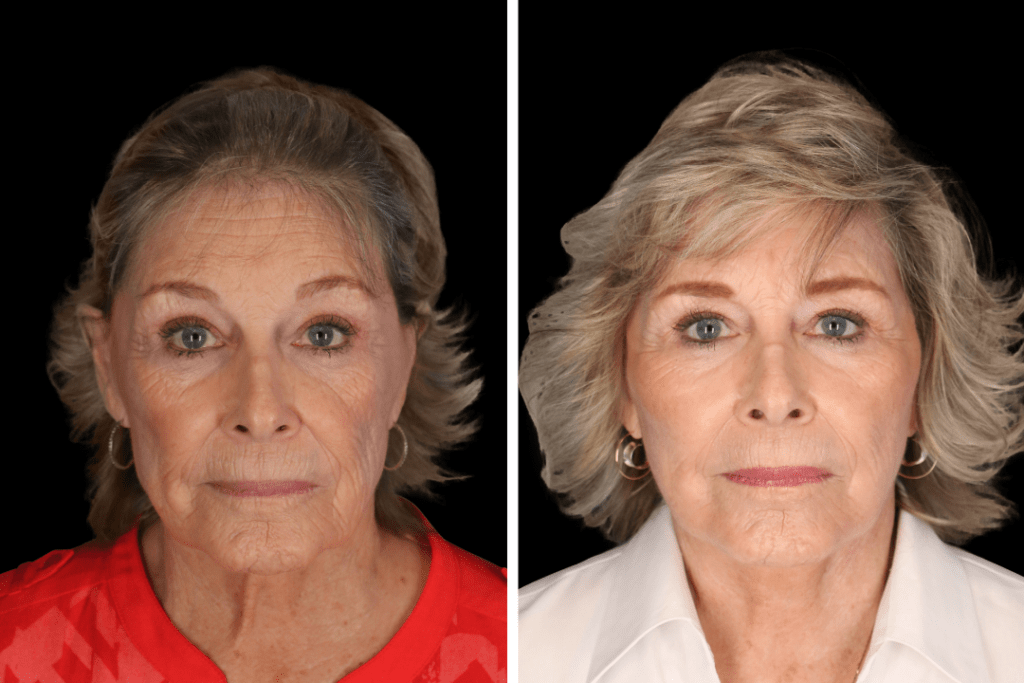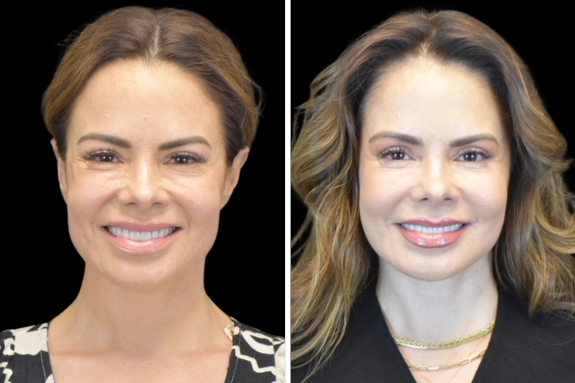

Interest in the upper lip has shifted noticeably over the past several years. Patients who once asked exclusively about filler now arrive at consultation asking about proportion: the distance between the base of the nose and the top of the lip, the amount of pink lip visible at rest, and whether the upper teeth show at all when the mouth is relaxed. These are structural questions, and they are not always answered well by adding volume. At Privé Beverly Hills, Dr. Catherine Chang evaluates the upper lip as part of the overall balance of the lower face, and the lip lift is one of the procedures she uses when the concern is length rather than fullness.
Beverly Hills and greater Los Angeles patients tend to be well informed and specific about what they want, and many have already tried injectable approaches. Some were satisfied for a time and then felt the result began to look heavy. Others found that filler improved fullness without improving the proportion that bothered them. This article explains what a lip lift is, which concerns it addresses, how Dr. Chang customizes the procedure, what recovery involves, and who is and is not an appropriate candidate.
A lip lift is a surgical procedure that shortens the distance between the base of the nose and the upper lip border, a region surgeons refer to as the cutaneous upper lip. In the most common technique, a small, carefully designed incision is placed within the natural contours at the base of the nose, a measured segment of skin is removed, and the upper lip is elevated slightly. The visible pink portion of the lip, the vermilion, rolls outward as a result, producing more show without the addition of any filler or implant.
The important distinction is that a lip lift changes proportion, while filler changes volume. Filler placed into a long upper lip can increase fullness, but it does not shorten the philtral distance, and in some cases it accentuates the length by adding weight below an already long segment of skin. A lip lift addresses the underlying measurement directly, which is why patients who have been dissatisfied with repeated filler sessions are often the ones who benefit most.
The philtral column region between the nose and the lip lengthens gradually over a lifetime. As it lengthens, the upper lip rolls inward, the natural pout flattens, and the amount of upper tooth visible at rest decreases. Dental show at rest is one of the details Dr. Chang measures during consultation, because a youthful, relaxed mouth typically shows a small amount of upper tooth, and its absence is one of the quieter markers of facial aging.
Philtral length also varies significantly by individual anatomy and by ancestry. Some patients have a naturally longer upper lip from early adulthood and have never felt it suited their features. Others notice the change only in their forties or later. Both are appropriate reasons to consider evaluation, but the surgical planning differs.
Concerns That Bring Patients to a Lip Lift Consultation
Patients describe this concern in varied language, and part of the consultation is translating those descriptions into anatomic terms.
A Flat or Disappearing Upper Lip
Many patients report that their upper lip has thinned even though the lower lip appears unchanged. This asymmetry between the two lips is common with age and contributes to an imbalanced smile. When the cause is inward rolling of the vermilion rather than genuine volume loss, a lip lift restores the visible lip border more predictably than injectables.
Filler Fatigue
A significant number of Beverly Hills patients arrive after several years of lip filler. They may feel their lips have become wider or heavier than intended, or that maintenance appointments no longer deliver the result they once did. Dr. Chang commonly recommends allowing existing filler to settle or resolve before assessing candidacy for a lip lift, so that surgical planning is based on the patient’s own anatomy.
Concern About Visible Scarring
This is the most frequently raised hesitation, and it deserves a direct answer. The incision for a subnasal lip lift is placed within the junction where the nose meets the lip, and the scar is designed to fall within that natural shadow. Healing varies among individuals and among skin types, and pigmented skin can respond differently during the maturation phase. Dr. Chang discusses expected scar behavior candidly, including the timeline over which redness fades, and outlines the aftercare that supports the best possible outcome.
Cultural and Ethnic Considerations
Lip proportion carries different aesthetic meaning across cultures, and there is no universal ideal measurement. Dr. Chang’s stated philosophy is that beauty is subjective and depends on inherent anatomy, genetics, skin type, and ethnic and cultural heritage. In the context of lip surgery, that means preserving the character of a patient’s features rather than converting every lip toward a single template. Conservative measurement is the rule, because a lip lifted too aggressively looks distinctly surgical and is difficult to reverse.
The lip lift at Privé Beverly Hills is planned individually, with measurements taken at rest and in animation, and with attention to how the result will interact with the nose, the chin, and the smile.
The Subnasal Bullhorn Lip Lift
This is the most widely performed approach and the one most often appropriate. The incision follows the curved base of the nose, and the amount of skin removed is measured precisely, typically a conservative segment calculated from the patient’s starting philtral length and the dynamics of the smile. Because the change is permanent, planning errs toward restraint.
Corner Lip Lift and Other Variations
Some patients are troubled less by upper lip length than by downturned oral commissures, which can give the resting face a stern expression. A corner lip lift addresses that specific concern and is a different operation with different candidacy. Dr. Chang determines which pattern, if any, fits the presenting anatomy rather than applying one technique universally.
Combining a Lip Lift with Other Procedures
Because the lip sits within the lower face, a lip lift is frequently discussed alongside other facial procedures. Patients considering rhinoplasty should know that nasal surgery and lip lift planning interact, since both involve the region at the base of the nose. Patients whose profile concern includes weak lower face projection may be evaluated for chin augmentation, which changes how the lips read in profile. Older patients addressing broader facial descent may consider a lip lift in the context of a facelift, and skin quality around the mouth may be addressed separately with CO2 laser resurfacing for fine perioral lines. When modest volume is still desirable after the proportion is corrected, injectable treatments can be used sparingly at a later stage.
Sequencing and Restraint
Dr. Chang states that she will not suggest a procedure she does not believe aligns with a patient’s aesthetic goals, and that she works toward those goals in the safest and most minimal way possible. For lip surgery, that principle usually translates into a single conservative operation, a period of observation, and refinement only if it remains warranted after full healing.
A lip lift is typically performed under local anesthesia, sometimes with light sedation, and it is an outpatient procedure. Patients go home the same day with specific instructions for wound care, activity, and diet during the initial healing period.
Swelling of the upper lip is expected and is most pronounced during the first three to five days. Many patients find that the lip looks fuller and more elevated than the final result during this phase, which can be disorienting if it is not anticipated. Sutures are generally removed within the first week. Bruising, if present, usually resolves within seven to ten days. Most patients feel comfortable returning to work and routine social activity within one to two weeks, and many plan the procedure around a period of lighter commitments.
Eating and speaking feel slightly restricted at first because of tension across the healing incision and swelling of the tissue. Patients are advised to avoid wide mouth opening, aggressive lip movement, and strenuous exercise for a defined period. Sun protection over the incision is emphasized during the months of scar maturation.
The final aesthetic result becomes clear over roughly three months, and the scar continues to fade beyond that. Realistic outcomes are measured in millimeters: slightly more visible pink lip, a small amount of upper tooth show at rest, and a shorter distance between the nose and the lip. What a lip lift does not do is make thin lips dramatically fuller, correct significant asymmetry of the smile, or alter the lower lip. Patients who understand this scope are consistently the most satisfied, and the outcome is intended to look like a well-proportioned mouth rather than an obviously operated one, in keeping with the practice standard, Results So Natural, It Will Be Your Best Kept Secret.
Good candidates generally have a longer than average distance between the base of the nose and the upper lip, little or no upper tooth show at rest, an upper lip that has rolled inward, and a desire for a permanent change in proportion rather than a temporary increase in volume. Nonsmokers in good general health with realistic expectations heal most predictably, and patients who have researched the procedure and can describe their goal precisely tend to plan well.
Several groups are not appropriate candidates, at least not at the time of initial consultation. Patients with a naturally short philtral distance risk an unnatural result and are advised against surgery. Patients with substantial recent lip filler are usually asked to wait. Active smokers are counseled to stop well before and after surgery because of the effect on wound healing. Individuals with a history of keloid or hypertrophic scarring, uncontrolled medical conditions, or unrealistic expectations shaped by heavily edited images are counseled carefully, and in some cases advised that the procedure is not in their interest. Patients whose primary concern is volume rather than proportion are better served by a conservative injectable plan.
Determining whether a lip lift is the right procedure requires measurement, photography, and an unhurried conversation about goals. At Privé Beverly Hills, Dr. Catherine Chang, a board-certified plastic and reconstructive surgeon with fellowship training at Harvard Medical School and Massachusetts General Hospital and a former clinical instructor of surgery at Harvard, evaluates the upper lip within the context of the whole face and recommends only what she believes will serve your goals.
Prospective patients are welcome to review the before and after gallery, read patient testimonials, and learn more about Dr. Chang. Those traveling to Los Angeles for care can review the resources for out of town patients. To arrange a consultation at the Beverly Hills office on Wilshire Boulevard, please visit the contact page.