
Facial aging rarely arrives all at once, and it rarely arrives in the same order for any two people. Some patients notice the first softening along the jawline in their early 30s while the neck and midface remain firm, while others see changes across the cheeks, jowls, and neck within the same few years. Because of this variation, one of the most important decisions in facial rejuvenation is not simply whether to have surgery, but how much surgery the face actually needs. At Privé Beverly Hills, Dr. Catherine Chang, a Harvard fellowship-trained, board-certified plastic and reconstructive surgeon, spends a significant part of every facial consultation on exactly this question. Choosing a lift that is matched to the degree of change, rather than the most extensive option available, is often what separates a refreshed result from one that looks operated on.
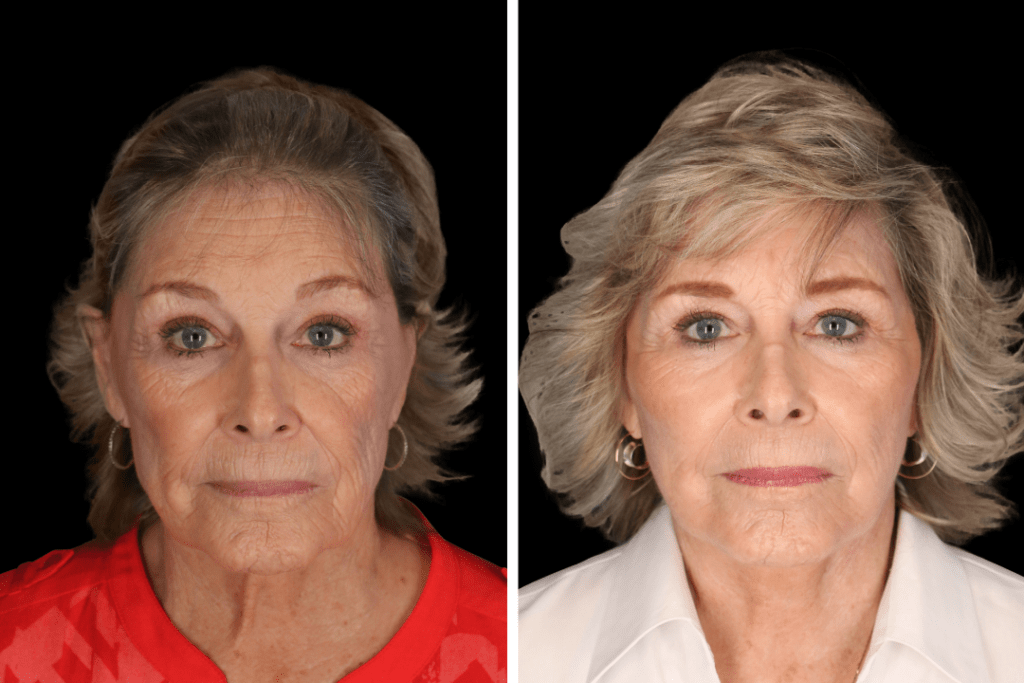
A full facelift addresses the lower face and, in most cases, the neck and midface as one connected unit. At Privé Beverly Hills, our full facelift is built around SMAS-based techniques, including Dr. Chang’s deep-plane approach, in which the deeper supportive layer of the face is released and repositioned so that the skin is not relied upon to carry the lift. This allows correction of more advanced jowling, deepened folds around the mouth, descent of the cheek, and laxity that continues into the neck. The incisions are longer, the dissection is broader, and the recovery is correspondingly more involved, although the results can be comprehensive and long-lasting.
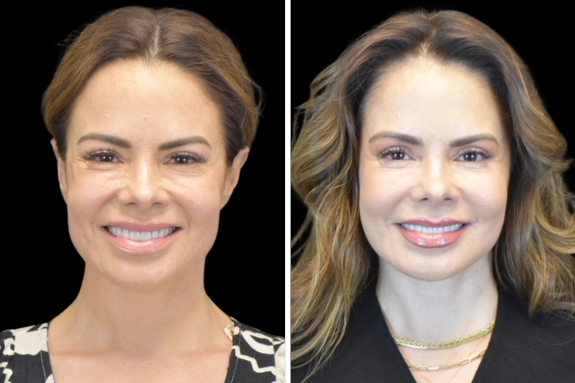
A mini facelift, sometimes called a short-scar facelift, is a more limited operation designed for earlier and more localized change. The incisions are shorter, the area of tissue undermining is smaller, and the focus is typically the jawline and the lower cheek rather than the entire face and neck. One of the most studied short-scar techniques, the minimal access cranial suspension (MACS) lift, was the subject of a systematic review by Hijkoop, Stevens, and van der Lei in the Journal of Plastic, Reconstructive and Aesthetic Surgery in 2022. The authors found that across 739 patients, no major complications were reported and satisfaction was relatively high, but they also noted that the effect on neck rejuvenation was limited and that an aging neck often required additional procedures. That finding captures the central trade-off well: a smaller lift can be an elegant solution when the problem is contained, and an incomplete one when it is not.
Dr. Chang developed the Bijoux Lift as her own mini lift technique for patients who show premature aging around the jowls but are not yet ideal candidates for a facelift. Using small incisions hidden in the groove behind the ear, the jawline is tightened with internal sutures, and excess skin is removed only when necessary. In some cases, a small incision beneath the chin is added, depending on the individual anatomy. The goal is definition and a subtle lift along the jaw without the use of fillers and without the scope of a full facelift.
Patients who are well-suited to a mini facelift often describe a specific, localized concern rather than a general sense of looking older. They may notice that the line of the jaw is less crisp than it once was, that a slight fullness has begun to form on either side of the chin, or that makeup and lighting no longer conceal a softening in the lower face. Many of these patients have good skin quality and a neck that still holds its shape. They are frequently in their late 20s, 30s, or early 40s, although age alone is never the deciding factor.
Another common pattern is the patient who has already tried non-surgical approaches and feels they have reached a ceiling. Dermal fillers, neuromodulators, and energy-based devices can each play a valuable role, but they have limits when true tissue laxity has begun along the jawline. According to Dr. Chang’s criteria for the Bijoux Lift, it is intended for individuals in whom non-surgical treatments such as filler, Botox, and radiofrequency devices have not produced enough improvement. For these patients, a small, precise surgical correction may help avoid years of escalating filler volume in an attempt to camouflage what is fundamentally a positional issue.
There is also a meaningful emotional dimension to this decision. Some patients feel hesitant about a full facelift because they associate it with a dramatic change, a long absence from work, or a result that may not feel like themselves. Others worry that choosing a smaller procedure means they are settling for less. We approach both concerns with care. A mini facelift is not a lesser version of a facelift; it is a different operation with a different purpose, and it is the right choice only when the anatomy supports it.
Candor about the limits of a mini facelift is part of responsible care. When jowling is pronounced, when the cheek fat has descended noticeably, or when there are vertical neck bands and loose skin beneath the chin, a short-scar approach is unlikely to deliver a result that feels balanced. Lifting the jawline alone while the neck remains lax can create a visible disconnect between the lower face and the neck. In these situations, a full facelift, often paired with a neck lift, is more likely to produce a harmonious outcome that holds over time.
The underlying reason is anatomical. In a 2019 paper in Plastic and Reconstructive Surgery, Stuzin, Rohrich, and Dayan described how the compartmentalized structure of facial fat explains the regional pattern of cheek deflation seen with aging, and how an individualized plan may combine deep compartment volume restoration with repositioning of the superficial fat through the SMAS. A limited lift has a limited ability to address those deeper structures across the whole face. When the changes extend beyond the jawline, a more complete operation allows our surgical team to reposition tissue where it was originally supported, rather than simply tightening what sits on top.
Patients who have had previous facial surgery also warrant particular consideration. Scar tissue, altered anatomy, and prior tension vectors can make a smaller procedure less predictable. For these patients, Dr. Chang may recommend a more comprehensive plan, and in some cases a dedicated revision approach, so that the result is both natural and durable.
Our Signature approach to facial rejuvenation begins with a detailed assessment of the face as a whole. Dr. Chang and our surgical team evaluate skin thickness and elasticity, the position of the cheek and jowl fat, the angle of the jaw and neck, the degree of volume loss in the midface and temples, and the symmetry of each side. We also listen closely to how each patient describes their own face, because the features that bother someone most are not always the ones that appear most obvious in a photograph. Dr. Chang’s philosophy is that beauty is subjective and shaped by anatomy, genetics, skin type, and ethnic and cultural heritage, so the goal is never to impose a single standard but to refine what is already there.
Many patients benefit from a combined plan in which the lift addresses position and a second treatment addresses volume or skin quality. Facial fat grafting may be used to restore fullness to areas that have hollowed with time, which a lift by itself cannot replace. For patients who want refinement of skin texture or mild tightening, our non-surgical options, including FaceTite and NeckTite, CO2 laser resurfacing, and Botox and injectable treatments, may be considered alongside or instead of surgery depending on the findings.
Good candidates for either a mini or full facelift are in stable general health, do not smoke, and have realistic expectations about what surgery can and cannot achieve. Conditions that affect healing, such as uncontrolled diabetes, bleeding disorders, or the use of certain blood-thinning medications, require careful review and may delay or change the plan. Patients who are pregnant or breastfeeding are generally advised to wait. A mini facelift may be a less suitable option for patients with significant neck laxity, heavy jowls, or very thin, sun-damaged skin, while a full facelift may be more than is needed for a younger patient with mild, isolated jawline softening. Dr. Chang will not recommend a procedure she does not believe aligns with a patient’s goals, and she strives to achieve those goals in the safest and most minimal way possible.
The consultation at our office on Wilshire Boulevard is unhurried and includes a facial examination, a review of medical history, and a discussion of how each option would likely look on your particular anatomy. Photographs are taken for planning purposes, and Dr. Chang will explain the incision placement, anesthesia, and expected recovery for the procedure she recommends. Patients traveling from outside LA or from out of state can arrange a coordinated schedule with our team.
Recovery after a mini facelift is generally shorter and lighter than after a full facelift, which is a large part of its appeal. Swelling and bruising are common in the first week and tend to settle progressively over the following two to three weeks. Many patients return to desk work and social activities once visible bruising has faded, while strenuous exercise is resumed later based on Dr. Chang’s guidance. Because the incisions are concealed behind the ear, they are typically discreet once healed.
A full facelift requires a longer period of healing, usually several weeks before patients feel comfortable resuming their full routine. Swelling may persist in subtle ways for a few months as the tissues settle into their new position. Our surgical team schedules follow-up visits at regular intervals throughout this period to monitor healing, adjust aftercare instructions, and answer questions as they arise.
With either procedure, the aim is a face that looks rested and well-defined rather than altered. Aging continues after any facelift, so results are best understood as resetting the clock rather than stopping it. A mini facelift may be followed years later by a more comprehensive procedure if and when further change occurs, and that sequence is entirely reasonable. The guiding principle at Privé Beverly Hills is captured in our practice’s own words: results so natural, it will be your best kept secret.
Dr. Catherine S. Chang, MD, FACS, completed her medical education at Columbia University College of Physicians and Surgeons, her combined general and plastic surgery training at the University of Pennsylvania, where she served as chief resident, and specialized fellowship training in cranio-maxillofacial aesthetic and reconstructive surgery at Harvard Medical School and Massachusetts General Hospital. She also served as a clinical instructor of surgery at Harvard Medical School. Her training in the structure of the facial skeleton and soft tissue informs how she evaluates whether a patient needs a limited lift or a comprehensive one. You can learn more about her background on our about page.
Dr. Chang has been recognized among Newsweek’s America’s Top Plastic Surgeons in 2021, 2023, 2024, and 2025. Just as meaningful to many patients is her commitment to an honest conversation about what is achievable, and her preference for the least invasive path that can meet a patient’s goals.
Deciding between a mini facelift and a full facelift is a personal choice that deserves an individualized assessment rather than a general rule. If you have begun to notice changes along your jawline or lower face and would like to understand which approach may suit your anatomy and your goals, we welcome you to meet with Dr. Catherine Chang and our surgical team in Beverly Hills. During your visit, we will review your concerns in detail, discuss the Bijoux Lift, the full facelift, and complementary treatments, and help you arrive at a plan you feel confident about. To begin, please contact our office to request a private consultation.