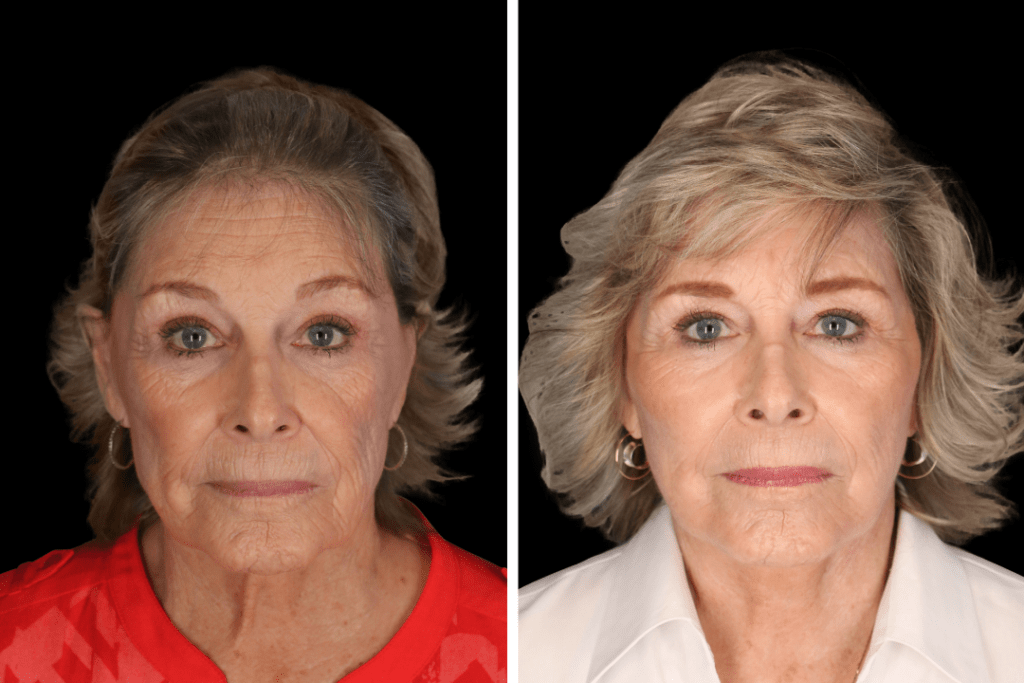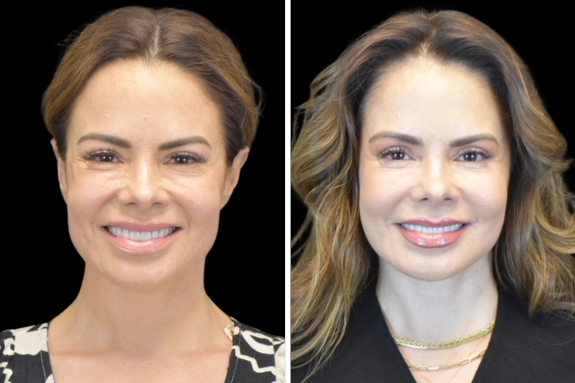
The cheeks occupy a quiet but decisive position in the architecture of the face. They sit at the intersection of the eyes, the nose, and the jawline, and they influence how light falls across the midface in photographs and in person. When the cheeks lose volume or sit lower than they once did, patients often describe the change in indirect terms: they look tired, they look flat in pictures, their lower face seems heavier than it used to. At Privé Beverly Hills, Dr. Catherine Chang approaches these observations as questions of proportion rather than as isolated complaints about a single feature.
Beverly Hills patients tend to arrive with a clear preference for restraint. They are not asking to look like someone else. They are asking to look rested, balanced, and recognizably themselves, particularly in the unforgiving lighting of professional and social settings across Los Angeles. This article explains what cheek enhancement actually involves, why small changes in the midface can shift the way an entire face reads, and how Dr. Chang tailors treatment to individual anatomy, heritage, and long-term goals.
The midface is built in layers. Bone provides the underlying scaffold, distinct fat compartments sit above it, muscle and connective tissue anchor the region, and skin covers the whole structure. The prominence most people call the cheekbone is a combination of the zygomatic bone and the deep fat pads that rest over it. When those layers are full and well supported, the midface projects gently forward and outward, creating a soft highlight beneath the outer corner of the eye.
Facial aging affects each of these layers on its own timeline. Bone remodels, and the orbital opening widens slightly; deep fat compartments deflate while more superficial compartments descend, and skin loses elasticity. The visible result is not simply a hollow cheek. It is a change in relationships: the under-eye region lengthens, the nasolabial fold deepens because volume has shifted downward, and the jawline appears less defined even though the jaw itself has not changed. This is why patients frequently point to their lower face when the underlying issue is the midface.
Some patients seeking cheek enhancement are not aging patients at all. Younger individuals may have naturally flat midface projection, a genetic pattern that is entirely normal and appears across many ethnic backgrounds. For these patients, the goal is definition rather than restoration. Dr. Chang draws this distinction early in consultation, because the two goals call for different planning even when the treated area is the same.
Facial harmony depends on the relationship between the upper, middle, and lower thirds of the face, and on the balance between the central and lateral portions of the midface. Adding volume without regard to those relationships tends to produce the overfilled appearance that many patients specifically want to avoid. A cheek that is too full centrally can flatten the transition to the nose. A cheek that is projected too far laterally can widen the face in ways that read as artificial in photographs.
The aim at Privé Beverly Hills is proportional correction measured in millimeters. Small, precisely located changes in the upper lateral cheek can lift the visual weight of the midface, soften the transition into the lower eyelid, and improve how the jawline reads, all without making the cheeks themselves an obvious focal point. This philosophy is consistent with the practice tagline, Results So Natural, It Will Be Your Best Kept Secret, and with Dr. Chang’s NakedBeauty philosophy, which emphasizes confidence without dependence on makeup, filters, or heavy retouching.
Patients rarely open a consultation by asking for cheek treatment by name. More often, they describe an impression. Understanding the concern beneath the request is the most important part of the visit.
Looking Tired Despite Adequate Rest
A hollow or descended midface casts a shadow beneath the lower eyelid. That shadow persists regardless of sleep, hydration, or concealer. Many patients in this situation have already tried under-eye treatments without satisfaction, because the shadow originates from loss of support in the cheek rather than from the eyelid itself. Restoring midface support often improves the under-eye appearance indirectly, and in some cases it reduces the need for eyelid intervention entirely.
Photographs That Do Not Match the Mirror
Camera lenses compress and flatten facial contours, and overhead lighting exaggerates midface hollowing. Patients who feel they look well in the mirror but consistently dislike candid photographs are frequently responding to a loss of midface highlight. This is a legitimate concern and deserves the same careful evaluation as any other aesthetic complaint.
Concern About Looking Overdone
This concern is common in Beverly Hills, where patients see the full spectrum of aesthetic outcomes in daily life. Many arrive specifically because they want a conservative plan, or because they have had filler elsewhere and felt the result was too heavy. Dr. Chang addresses this directly by discussing what will not be done as clearly as what will, and by staging treatment when appropriate rather than delivering everything in one session.
Midface structure varies meaningfully across ancestries, and standard proportional templates do not apply universally. A patient of East Asian heritage, a patient of African descent, and a patient of Northern European descent may each have different native cheek projection, different fat distribution, and different aesthetic goals. Dr. Chang’s stated view is that beauty is subjective and depends on inherent anatomy, genetics, skin type, and ethnic and cultural heritage. In practice, that means planning around each patient’s own features rather than imposing a single ideal.
There is no single procedure that suits every midface. Privé Beverly Hills offers both non-surgical and surgical approaches, and the recommendation depends on the degree of volume loss, the quality of skin support, the patient’s age and goals, and how long the patient wants the result to last.
Injectable Volume Restoration
For patients with mild to moderate volume loss and good skin quality, injectable treatments are often the appropriate starting point. Placement matters more than quantity. Deep placement over the zygomatic arch supports the lateral cheek and produces a lifting effect, while superficial placement in the medial cheek is used sparingly and only when the anatomy calls for it. Conservative volumes, reassessed over time, tend to produce more natural results than a single large session.
Facial Fat Grafting
Facial fat grafting uses the patient’s own fat, harvested through small-volume liposuction and processed before careful reinjection into the midface. It is well suited to patients seeking longer-lasting volume restoration, and it can be performed alone or in combination with other facial procedures. A portion of the transferred fat does not survive, which is expected and accounted for in planning, and some patients elect a secondary session to refine the result.
Structural Support with Implants
For patients whose concern is skeletal rather than soft tissue, custom facial implants provide permanent projection that filler cannot replicate. Cheek implants are frequently considered alongside chin augmentation, since midface and chin projection together determine much of the profile. Dr. Chang evaluates both regions rather than treating either in isolation.
Repositioning Rather Than Adding
When descent, not deflation, is the dominant issue, adding volume can worsen the appearance. In these cases a facelift that repositions deeper tissue planes addresses the actual anatomy, and it can be paired with modest volume restoration. For patients with lower face fullness that competes with cheek definition, buccal fat removal may be discussed, though Dr. Chang applies a conservative standard here because the lower face continues to lose volume with age.
Skin Quality as Part of the Plan
Contour and skin surface are separate variables. Treatments such as CO2 laser resurfacing and microneedling with Morpheus8 address texture, tone, and fine lines that volume alone will not improve. Many patients benefit from a sequenced plan that addresses structure first and surface afterward.
Recovery depends entirely on the approach selected. Injectable treatment typically involves mild swelling and possible bruising for several days, with most patients returning to normal activity immediately and to social commitments within a week. The final result is best judged at two to four weeks, once swelling has resolved and the product has settled.
Fat grafting involves more initial swelling, generally most noticeable during the first week and improving substantially over two to three weeks. The graft continues to stabilize over several months, and patients are advised not to evaluate the result prematurely. Implant placement and surgical lifting procedures carry longer recovery timelines, with detailed instructions provided before surgery and close follow-up afterward.
Outcomes should be understood in proportional terms. A well-executed midface plan produces a face that looks rested and balanced rather than visibly treated. Friends and colleagues frequently notice that a patient looks well without identifying what changed. Results are meaningful but not permanent in every case: injectable results are temporary by design, fat grafting persists longer with some gradual change, and implants remain stable while the surrounding tissues continue to age normally.
Appropriate candidates are generally in good general health, have realistic expectations, and can articulate what bothers them about their appearance. Patients with genuine midface volume loss, naturally low cheek projection, or shadowing at the lid and cheek junction often see meaningful improvement. Candidates who understand that treatment is proportional refinement, not reinvention, tend to be the most satisfied.
Some patients are better served by waiting or by a different plan. Active skin infection in the treatment area, certain autoimmune or bleeding disorders, uncontrolled medical conditions, and pregnancy are reasons to postpone. Patients with significant tissue descent may be disappointed by injectable treatment alone and are counseled toward surgical options or advised that no treatment is preferable to the wrong one. Patients whose expectations are shaped by heavily edited images are given a candid discussion about what the anatomy will and will not allow.
Dr. Chang declines to recommend procedures she does not believe align with a patient’s stated goals, and she prioritizes the safest and most minimal approach that can achieve them. That standard sometimes means recommending less treatment than a patient expected, or none at all.
Midface balance is highly individual, and the most useful next step is an in-person evaluation. During a consultation at Privé Beverly Hills, Dr. Catherine Chang, a board-certified plastic and reconstructive surgeon with fellowship training at Harvard Medical School and Massachusetts General Hospital, will assess your facial proportions, discuss your goals, and outline the options that fit your anatomy and your timeline. Patients are welcome to review the before and after gallery and patient testimonials beforehand, and those traveling from outside the area can review resources for out-of-town patients.
To arrange a consultation at the Beverly Hills office on Wilshire Boulevard, please visit the contact page. Thoughtful, proportional treatment begins with a conversation.